
Blog
Botox Side Effects & Botox vs Fillers: Which Do You Need?

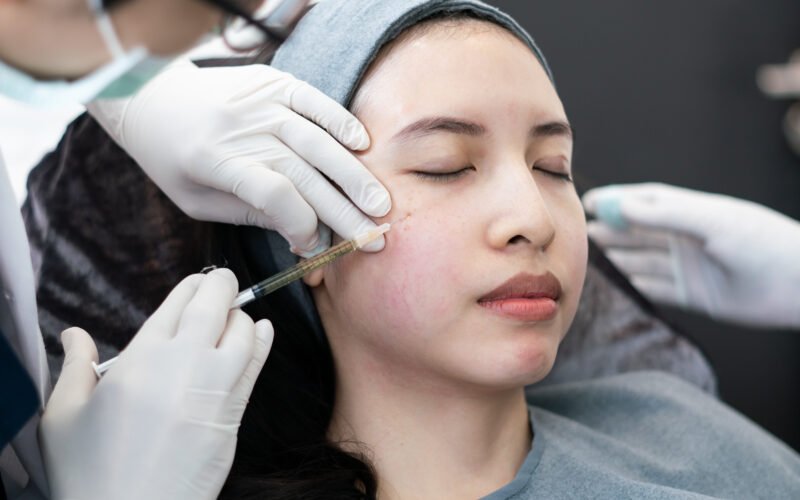
Botox and dermal fillers are the two most common non-surgical anti-ageing injections, yet many people still confuse them. Others hesitate because they worry about side effects or looking “frozen”.
In this guide our medical team explains how Botox works, its possible side effects, and how to tell whether Botox, fillers or both are right for your concern.
Botox or fillers? If you are unsure whether to choose Botox or fillers, the simple rule is: Botox for lines that appear when you move, fillers for lines and hollows caused by volume loss.
What does Botox do?
Botox (botulinum toxin type A) temporarily relaxes the muscles that cause expression lines. It is used for forehead lines, frown lines and crow’s feet, as well as medical and cosmetic uses such as jaw slimming, teeth grinding and excessive sweating. Results appear in 3–14 days and last around 3–4 months.
What do dermal fillers do?
Dermal fillers are usually made of hyaluronic acid, a substance naturally found in skin. Rather than relaxing muscles, they add volume and structure — restoring cheeks, softening deep folds, shaping the jawline or enhancing the lips. Results are immediate and last 6–18 months depending on the area and product.
Botox vs fillers: quick comparison
- Botox – for lines caused by movement (forehead, frown, crow’s feet).
- Fillers – for lines and hollows caused by volume loss (smile lines, marionette lines, under-eye hollows).
- Both – many patients benefit from a combined plan for balanced, natural rejuvenation.
Our wrinkle treatment guide explains how we match each line to the right treatment.
Common Botox side effects
Botox is one of the most studied cosmetic treatments and is very safe in trained hands. Common, temporary side effects include:
- Small bumps or redness at injection points for 15–30 minutes
- Minor bruising
- A mild headache on the first day
- A feeling of heaviness in the forehead as the product settles
Rare Botox side effects
Less common effects are usually linked to technique or product spreading:
- Drooping eyelid or brow (ptosis), which is temporary and improves over weeks
- Asymmetry that can be corrected at a two-week review
- Allergic reaction (very rare)
Choosing an experienced injector, using genuine products and following aftercare reduce these risks significantly.
Botox aftercare to reduce side effects
- Stay upright for four hours after treatment.
- Do not rub or massage the treated area.
- Avoid exercise, saunas and alcohol for 24 hours.
- Attend your two-week review for any fine-tuning.
Who should avoid Botox?
Botox is not recommended during pregnancy or breastfeeding, for people with certain neuromuscular conditions (such as myasthenia gravis) or if there is infection at the injection site. Always share your medical history at consultation.
How to choose a safe injector
- Treatment by a qualified doctor or trained medical practitioner
- Genuine, sealed products with traceable batch numbers
- A full consultation and medical history before treatment
- A follow-up review included
- Hyaluronidase available on site for filler complications
Very cheap offers at salons or home visits often cut corners on products and training, which is where most complications come from.
Preventative Botox: is it worth it?
Many people in their late 20s and early 30s choose small doses of Botox to soften lines before they become deeply etched. Used sensibly, preventative treatment can reduce the need for fillers later. It should still be conservative, with regular reviews rather than constant top-ups.
Natural results: our approach
We assess your face at rest and in movement, consider your facial proportions and aim for subtle improvements. Often a small amount of Botox with carefully placed filler gives a fresher look than a large dose of either alone. You can see how lines are matched to treatments in our wrinkle treatment guide.
Botox for medical and functional concerns
Beyond wrinkles, Botox is widely used for functional problems. Injections into the masseter muscles reduce teeth grinding and jaw clenching, and can slim a square jawline over a few months. Botox in the underarms, palms or feet reduces excessive sweating (hyperhidrosis) for six months or more. Small doses can also lift the corners of the mouth, soften a gummy smile or relax neck bands. These treatments have their own side effect profiles — for example, temporary chewing fatigue after masseter Botox — which your doctor will explain at consultation.
Book a consultation
Learn more on our Botox in Lahore and Botox in Islamabad pages, or explore lip fillers and jawline fillers.
Key takeaways
- Botox relaxes muscles; fillers restore volume.
- Most Botox side effects are mild and short-lived.
- Rare effects like eyelid droop are temporary and reduced by expert technique.
- A combined plan often looks most natural.
Frequently asked questions
How long do Botox side effects last?
Most last minutes to a few days; rare eyelid droop improves within weeks.
Is Botox or filler better for wrinkles?
Botox for movement lines, fillers for volume-loss lines.
Can Botox and fillers be done together?
Yes, often in the same appointment.
Will I look frozen?
Not with a natural, conservative dose.
How long does Botox last?
Around 3–4 months.
How long do fillers last?
6–18 months depending on the area.
Book a consultation at London Aesthetics UK
Every treatment at London Aesthetics UK starts with a consultation so we can recommend what is genuinely right for your skin. Visit us at 18 CCA Street 7, DD Block, DHA Phase 4, Lahore or Jinnah Boulevard, Sector E, DHA Phase II, Islamabad, call +92 328 8886444, or explore all of our aesthetic treatments.
This article is for general information and does not replace a personal medical consultation. Results vary between individuals.