
Blog
Lip Filler Side Effects: What Is Normal and What Is Not

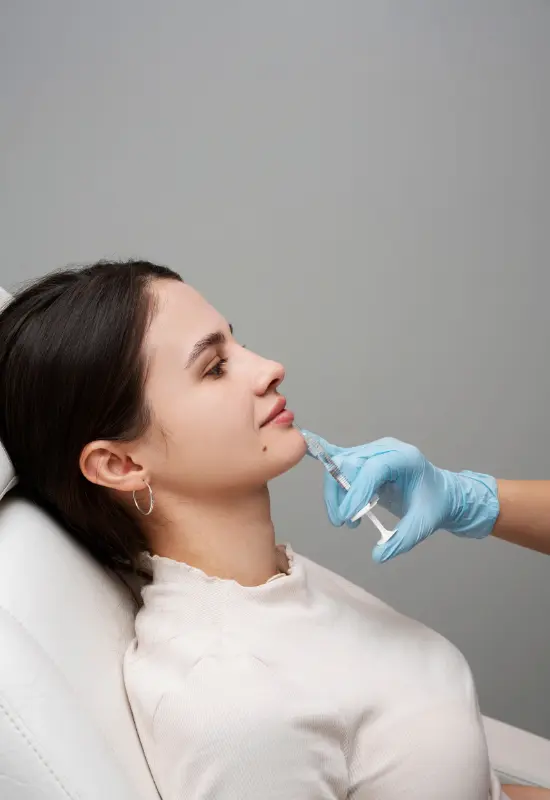
Lip fillers can add volume, definition and balance to the lips in under an hour. Because the lips are delicate and very vascular, some swelling and bruising is expected — but it helps to know what is normal, what is rare and when to call your clinic.
This guide covers the full recovery timeline and the warning signs every patient should know.
Understanding the side effects of lip fillers before treatment helps you recover calmly and recognise when to seek help.
How lip fillers work
Lip fillers use hyaluronic acid gel to add volume, shape the Cupid’s bow, define the border and improve symmetry. Because hyaluronic acid is dissolvable with an enzyme called hyaluronidase, results can be corrected if needed — one reason it is the safest choice for lips. Learn more on our lip fillers in Pakistan page.
Normal lip filler side effects
- Swelling – peaks at 24–48 hours and settles over 1–2 weeks. Lips often look uneven while swelling subsides.
- Bruising – small bruises are common and fade in 5–10 days.
- Tenderness – mild soreness for a few days.
- Small lumps – usually settle as the filler integrates; your injector may massage them at review.
Lip filler recovery timeline
- Day 1–2: maximum swelling; lips look bigger than the final result.
- Day 3–7: swelling reduces; bruising fades.
- Week 2: the true result is visible; review appointment.
- Months 6–12: filler gradually breaks down; top-ups as desired.
Rare but serious complications
Serious complications are rare when treatment is performed by trained medical practitioners, but you should know the signs:
- Vascular occlusion – filler blocking a blood vessel. Signs are severe pain, white or blue-grey skin, or mottled patches. This is an emergency and needs immediate treatment with hyaluronidase.
- Infection – increasing redness, heat, pus or fever.
- Cold sore flare-ups – if you are prone to cold sores, ask about preventive medicine.
- Allergic reaction – very rare with modern fillers.
- Migration – filler moving above the lip border, usually from overfilling over time.
How to reduce side effects
- Avoid aspirin, ibuprofen, fish oil and alcohol for 24–48 hours before treatment (unless prescribed).
- Choose genuine, CE-marked or FDA-approved hyaluronic acid fillers.
- Apply cold compresses gently after treatment.
- Avoid kissing, straws, hot drinks and exercise for 24 hours.
- Sleep with your head slightly raised for the first night.
How much filler do you need?
Most first-time patients start with 0.5–1 ml for a subtle enhancement. Building gradually over several appointments gives the most natural look and reduces the risk of migration. Very large volumes in a single session increase swelling and complication risk.
Lip filler myths
- “Fillers stretch the lips permanently.” – Sensible amounts do not; overfilling over years can contribute to migration.
- “Once you stop, lips look worse.” – Lips return to their natural shape as filler dissolves.
- “All fillers are the same.” – Products differ in softness and durability; lips need a soft, flexible filler.
- “Lip filler is risk-free.” – It is safe in trained hands, but it is a medical procedure.
When to contact your clinic
Call us straight away if you notice severe or worsening pain, colour changes such as white, dusky or blue patches, blisters, fever or changes in vision. Mild swelling and bruising are normal; these symptoms are not. At London Aesthetics UK, every lip filler patient receives aftercare instructions and a contact number.
Preparing for your lip filler appointment
Good preparation reduces swelling and bruising. In the week before, avoid unnecessary blood-thinning supplements such as fish oil, vitamin E and ginkgo (always check with your doctor before stopping prescribed medicines). Do not book lip fillers in the two weeks before a major event, so that any swelling or bruising has time to settle. If you get cold sores, tell us in advance so we can advise on antiviral tablets. Arrive with clean lips, free of lipstick, and eat beforehand so you feel comfortable during treatment.
Choosing a safe clinic
Lip fillers should only be performed by trained medical practitioners who keep hyaluronidase on site and offer follow-up care. At London Aesthetics UK treatments are performed under the supervision of Dr. Salma Merritt. For even lip colour, you may also like our dark lips treatment.
Key takeaways
- Swelling and bruising are normal and settle within two weeks.
- Severe pain or skin colour changes need urgent attention.
- Hyaluronic acid filler can be dissolved if needed.
- Choose medical injectors with emergency protocols.
Frequently asked questions
How long does lip filler swelling last?
It peaks in 1–2 days and settles within about two weeks.
Are lumps normal after lip filler?
Small lumps are common and usually settle within two weeks.
Can lip fillers be dissolved?
Yes, hyaluronic acid fillers can be dissolved with hyaluronidase.
What are signs of a lip filler emergency?
Severe pain, pale or blue-grey skin or mottling — contact your clinic immediately.
How long do lip fillers last?
Usually 6–12 months.
Can I exercise after lip fillers?
Wait at least 24 hours.
Book a consultation at London Aesthetics UK
Every treatment at London Aesthetics UK starts with a consultation so we can recommend what is genuinely right for your skin. Visit us at 18 CCA Street 7, DD Block, DHA Phase 4, Lahore or Jinnah Boulevard, Sector E, DHA Phase II, Islamabad, call +92 328 8886444, or explore all of our aesthetic treatments.
This article is for general information and does not replace a personal medical consultation. Results vary between individuals.