Blog
PRP Benefits for Skin & Hair — and Is PRP Painful?

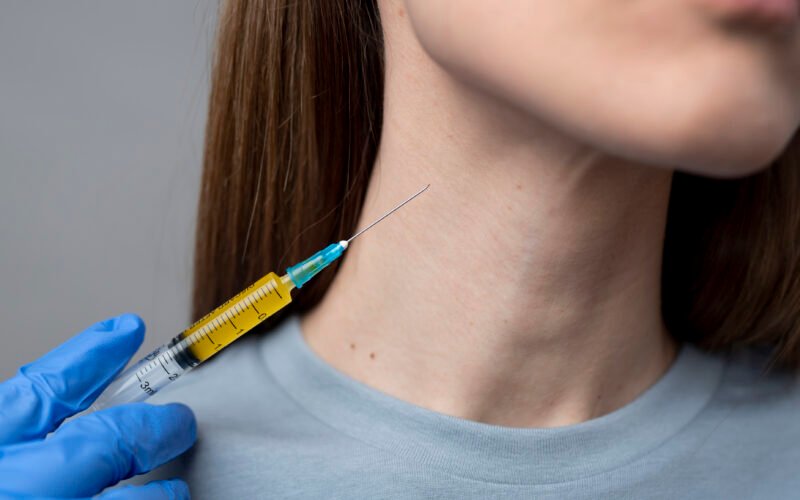
PRP (platelet-rich plasma) uses growth factors from your own blood to support skin and hair renewal. Because it is natural, it appeals to people who want results without synthetic products.
In this guide we cover the main PRP benefits for skin and hair, what the treatment involves and — one of the most common questions — whether PRP is painful.
How PRP works
A small blood sample is taken and spun in a centrifuge to separate the platelet-rich plasma. This concentrated plasma, rich in growth factors, is then injected or microneedled into the skin or scalp, where it supports collagen production, healing and hair follicle activity.
PRP benefits for skin
- Brighter, healthier-looking skin
- Improved texture and fine lines
- Support for acne scar repair when combined with microneedling
- Thin, crepey under-eye skin
- Natural — uses your own blood
See PRP for face and our acne scar treatment.
PRP benefits for hair
- Reduced hair shedding
- Thicker, stronger existing hair
- Support for early male and female pattern thinning
- Works well alongside medical hair loss treatment
See PRP hair treatment in Lahore and PRP hair treatment in Islamabad.
Is PRP painful?
Most patients describe PRP as mildly uncomfortable rather than painful. The blood draw feels like a normal blood test. For the face, numbing cream is applied for 30–45 minutes beforehand. The scalp is more sensitive, so we use numbing and careful technique. Discomfort usually lasts only during the injections, followed by tenderness for a day.
How to make PRP more comfortable
- Arrive well hydrated and after a light meal.
- Ask for numbing cream or a cooling device.
- Avoid caffeine and alcohol beforehand.
- Use breathing techniques and short breaks.
Side effects and recovery
Expect mild redness, swelling and pinpoint bruising for 24–72 hours. Avoid makeup for 12 hours and hair washing for 24 hours after scalp PRP. Because PRP uses your own blood, allergic reactions are very unlikely.
What happens during a PRP appointment?
- Consultation – we review your goals and medical history.
- Blood draw – a small sample, similar to a routine blood test.
- Preparation – the sample is spun to concentrate platelets (about 10–15 minutes).
- Numbing – cream is applied to the face or scalp.
- Treatment – PRP is injected or microneedled into the skin.
The full appointment takes 60–90 minutes.
PRP myths
- “PRP works in one session.” – Results build over a course of treatments.
- “PRP is a vampire facial gimmick.” – PRP has a long history in sports medicine and wound healing.
- “PRP regrows hair on bald areas.” – It strengthens existing follicles; it cannot create new ones.
- “PRP is the same everywhere.” – Preparation methods and platelet concentration vary between clinics.
Getting the best PRP results
Eat well, stay hydrated and avoid smoking and alcohol before treatment, since healthy blood gives better plasma. Avoid anti-inflammatory painkillers for a few days afterwards unless prescribed, because they can blunt the healing response.
Who should not have PRP?
PRP is not recommended during pregnancy, for people with platelet or blood disorders, active infections, a history of certain cancers, or those taking blood-thinning medicines that cannot safely be paused. Heavy smokers and people with very low platelet counts may also see weaker results. A medical consultation before treatment ensures PRP is safe and appropriate for you.
PRP vs other regenerative treatments
PRP can be compared with exosome therapy and polynucleotides. Your doctor will recommend the best option for your goals.
Key takeaways
- PRP uses your own growth factors for skin and hair renewal.
- It is mildly uncomfortable, and numbing helps.
- Most people need three to four sessions.
- Results are gradual and natural.
Frequently asked questions
Is PRP painful?
Mildly uncomfortable; numbing keeps it manageable.
How many PRP sessions are needed?
Usually three to four, a month apart.
When will I see PRP results?
Skin improves over 4–8 weeks; hair over 3–6 months.
Is PRP safe?
Yes, it uses your own blood with sterile technique.
Who should avoid PRP?
People with blood disorders, active infection or cancer, and pregnant women.
Can PRP be combined with microneedling?
Yes, it is a popular combination.
Book a consultation at London Aesthetics UK
Every treatment at London Aesthetics UK starts with a consultation so we can recommend what is genuinely right for your skin. Visit us at 18 CCA Street 7, DD Block, DHA Phase 4, Lahore or Jinnah Boulevard, Sector E, DHA Phase II, Islamabad, call +92 328 8886444, or explore all of our aesthetic treatments.
This article is for general information and does not replace a personal medical consultation. Results vary between individuals.